

What makes a farm equipment brand reliable?

The Most Reliable Farm Equipment Brands by Job
Reliability on a farm is about more than a machine starting on a cold morning. It also depends on three things. Does the tool fit the job? Can you get parts and service easily? And does the brand have a proven record in your kind of work?
For many farms, the most dependable setup mixes big machinery with small runabouts. That usually means New Holland, Manitou, Amazone and SlurryKat for heavy work, with Kawasaki or Honda ATVs for getting around.
What makes a farm equipment brand reliable?
A dependable brand keeps breakdowns to a minimum during the busy seasons. In other words, real-world uptime matters more than how good a machine looks on paper.
The right choice depends on your workload, dealer back-up, ease of servicing and attachment fit. Operator comfort matters too, as does how well the machine suits your acreage, livestock, soil type and labour.
For example, New Holland may suit you if you want tractors, balers, hay tools, sprayers or combines from one maker. Manitou makes sense when lifting, loading, feeding and stacking slow you down every day. Meanwhile, Amazone is a common choice when precision spreading, spraying, seeding and soil work matter.
SlurryKat is more specialist. However, for livestock farms handling slurry, that focus is exactly the point. Finally, Kawasaki and Honda ATVs bridge the gap between walking and firing up a tractor for every small trip.
The standout brands by farm job
The best farm brands don’t always compete with each other. A slurry specialist isn’t trying to replace a tractor maker, and an ATV is no telehandler. So think about the job first, then match the brand to the work.
| Farm need | Brands to consider | Best fit |
|---|---|---|
| Tractors, hay tools, combines, balers | New Holland | Mixed farms, dairy, livestock, arable, hay and forage |
| Lifting, loading, feeding, stacking | Manitou | Livestock units, grain stores, bale handling, mixed farms |
| Spreading, spraying, seeding, soil prep | Amazone | Arable farms, contractors, precision-focused growers |
| Slurry tankers and umbilical systems | SlurryKat | Dairy, beef and livestock farms managing manure |
| Farm ATVs and utility transport | Kawasaki and Honda | Checking stock, hauling supplies, towing light trailers, fencing |
What each brand covers
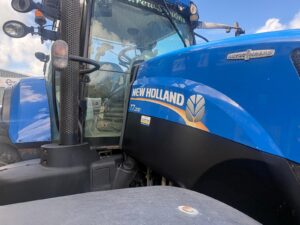
New Holland’s range covers tractors, combines, hay and forage kit, balers, sprayers, seeding tools and precision farming tech. That’s why it often comes up when people talk about broad-line brands. Its main strength is breadth. In short, you can build much of your core fleet around one name rather than mixing suppliers. (newholland.com)
Manitou, by contrast, focuses on handling. Its farm telehandlers are built for hay handling, livestock feeding, silage work, transport and loading. Attachments also stretch their use across the yard and field edge. So where moving materials eats up hours each week, a Manitou can matter as much as the tractor. (manitou.com)
Amazone stands out for crop production kit, especially spreaders, sprayers, seed drills and soil tools. Its range caters for farms of different sizes. For instance, it offers mounted, trailed and self-propelled sprayers, plus seeding systems for mulch and direct drilling. (amazone.us)
SlurryKat, on the other hand, is a specialist. Its line-up includes slurry tankers, umbilical systems, hose reelers, dribble bars and trailing shoe applicators. This makes it especially useful for livestock farms that need dependable nutrient application kit. (slurrykat.com)
New Holland is the broad-line workhorse
If you want one name for the core machinery shed, New Holland deserves a place on your shortlist. It’s one of the best-known brands for tractors, balers, combines, hay tools, forage machines and sprayers. That breadth matters, because reliability is partly about keeping things simple. Fewer mismatched machines and unfamiliar controls mean a clearer route to parts and service.
New Holland suits farms that make hay, keep livestock, grow crops or need tractors for many jobs. These might include loader work, mowing, baling, transport and field work. A small mixed farm might look at utility tractors and hay tools. By comparison, a larger operation may weigh up combines, high-horsepower tractors or sprayers. Either way, judge the local dealer as carefully as the badge on the bonnet.
When comparing New Holland with other brands, ask practical questions. Can your nearest dealer support the models you want? Will parts be in stock locally at peak season? Do your operators already know the controls? After all, a reliable machine with weak support can still let you down at the worst moment.
Manitou earns its place in busy yards
Manitou is often worth a look when a tractor and loader no longer feel efficient enough. Some farms have bales to stack, feed to move, grain to load and trailers to fill. These farms often benefit from a dedicated farm telehandler. Manitou builds its machines around these handling jobs rather than treating them as occasional tasks. (manitou.com)
The biggest benefit is workflow. With a Manitou telehandler, one operator can lift higher, reach further and swap attachments for different yard jobs. On livestock farms, that may mean faster feeding and bedding. Arable farms, meanwhile, may load seed, fertiliser or grain more quickly.
Put Manitou high on your list if handling, not horsepower, is what slows you down. If you only move a few bales a week, a loader tractor may be enough. But when handling is a daily job, Manitou becomes one of the most important brands to consider.
Amazone and SlurryKat bring specialist reliability
Amazone and SlurryKat show that “reliable” often means “specialist”. Amazone focuses on crop establishment, spreading, spraying and soil work. This suits growers who want more accurate application or tighter control of inputs. In those cases, Amazone may fit better than a general implement brand.
SlurryKat meets a different but equally practical need. Slurry kit works in tough conditions, and breakdowns during spreading windows cause real stress. That’s why a specialist like SlurryKat deserves attention. It focuses on tankers, umbilical systems, dribble bars and applicators instead of treating slurry as a side line. (slurrykat.com)
In practice, these four brands can work together rather than compete. New Holland might supply the tractor power, while Manitou handles loading and yard work. Amazone could then manage crop inputs, and SlurryKat could take care of slurry. Together, they cover many essential farm jobs without forcing everything into one brand family.
Are Kawasaki and Honda ATVs good choices for farm use?
Yes, when they’re matched to the right jobs. Kawasaki and Honda ATVs are ideal for checking livestock, moving between fields and carrying fencing supplies. They also suit towing small trailers, checking water troughs and other light jobs where a tractor is too much. Of course, they don’t replace tractors, telehandlers or UTVs. Still, on many farms they become daily kit because they save time on short, repeated trips.
Kawasaki ATVs
Kawasaki markets selected side-by-sides and ATVs for farm and ranch use through its agricultural sales programme. Its Brute Force utility ATVs focus on towing and cargo racks for everyday chores. For example, the Brute Force 450 4×4 is listed with a 1,050 lb (about 475 kg) towing capacity. The Brute Force 750, meanwhile, is rated at 1,250 lb (about 565 kg), with generous rack capacity. (kawasaki.com)
Honda ATVs
Honda ATVs, especially the FourTrax Rancher line, are also strong options. Current Rancher 4×4 specs list an 848 lb (about 385 kg) towing capacity, plus front and rear racks. These features help with hauling tools, checking stock and crossing rough ground. Honda also stresses rider training and age guidance. That matters, because farm ATV reliability includes safe, correct use. (powersports.honda.com)
Kawasaki or Honda?
When choosing between the two, think about terrain, towing needs, rider comfort, rack capacity and dealer support. Kawasaki may appeal if towing is a priority, especially the Brute Force models. Alternatively, Honda may suit you if you value simple utility, plenty of accessories and a long record of practical use.
A practical checklist before choosing a brand
Before you commit to any farm equipment brand, run through this quick check:
- Match the tool to the task. Go for New Holland for broad machinery needs and Manitou for handling. Amazone suits crop application and seeding, SlurryKat covers slurry, and Kawasaki or Honda ATVs handle light farm transport.
- Check local support. A nearby dealer with parts and service can matter more than a slightly better spec sheet.
- Think in seasons, not demos. Ask how the machine copes in wet weeks, busy harvests, winter feeding and daily stock checks.
- Consider operator comfort. A comfortable machine reduces tiredness, especially on ATVs, telehandlers and other kit used every day.
- Plan for maintenance. Reliable brands make it easier to service and repair equipment, so you replace it less often.
- Avoid overbuying. A small farm may get more from a good ATV and durable hand tools than from oversized machinery.
The most reliable setup is a matched system
No single brand makes the best version of every farm tool. Instead, the most dependable farms combine brands by strength. That might mean New Holland for core machinery, Manitou for lifting and Amazone for precision field kit. Add SlurryKat for slurry, Kawasaki or Honda ATVs for getting around, and specialist makers for hand tools.
If you’re building or upgrading your fleet, start with the jobs that cost you the most time or downtime. Then choose brands proven in those exact roles, backed locally and comfortable to use every day. Ultimately, that approach beats chasing one logo across the whole farm.
Sign-Up For Our Newsletter
Receive updates on new products, sales & offers!
Thanks for subscribing! Please check your email for further instructions.
