

What should a good farm equipment supplier help you solve?

Choosing the right source for agricultural equipment is about more than finding a machine that fits the job. A dependable supplier helps you match equipment to your acreage, crops, terrain, budget, and service needs so your operation can keep moving when timing matters. Whether you are comparing tractors, hay tools, tillage equipment, or everyday farming supplies, the best choice is usually the partner who supports the machine long after the sale.
What should a good farm equipment supplier help you solve?
A good farm equipment supplier should help you reduce downtime, choose the right size and type of machine, access parts and service quickly, and make sense of financing, trade-ins, rentals, or used equipment options. The goal is not just to sell farming gear, but to help you make a practical investment that supports daily work, seasonal pressure, and long-term productivity.
That support matters because farm machinery is rarely a casual purchase. A tractor that is too small may waste time and fuel, while one that is larger than needed can increase ownership costs without adding real value. The same is true for balers, spreaders, tillage tools, loaders, and precision technology. A knowledgeable equipment dealer should ask how you work before recommending what you buy.
The strongest suppliers often understand local conditions as well. Soil type, weather windows, crop mix, road access, storage space, and service distance can all influence which agricultural machinery makes sense. A dealer who knows the region can help you avoid equipment that looks impressive on paper but does not fit the way your farm actually runs.
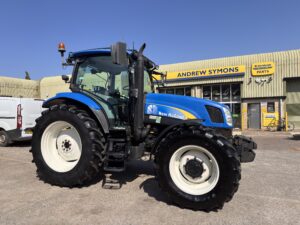
The main types of equipment to compare
Most buyers begin with a specific need, such as replacing a tractor, upgrading hay tools, or adding a more efficient planter. Still, it helps to look at your equipment needs as a system. One machine affects the next, and the right supplier can help you think through compatibility, capacity, and maintenance before you commit.
Common categories include:
- Tractors: Often the backbone of an operation, tractors handle loader work, mowing, tillage, hauling, planting support, and many other jobs when paired with the right implements.
- Tillage and soil preparation tools: Plows, discs, cultivators, harrows, and similar implements help prepare fields, manage residue, and create better seedbed conditions.
- Planting and seeding equipment: Seed drills, planters, and related attachments support accurate placement, spacing, and field efficiency.
- Hay and forage equipment: Mowers, rakes, tedders, balers, wrappers, and forage tools are essential for livestock, hay, and mixed operations.
- Application equipment: Fertiliser spreaders, sprayers, and manure handling equipment help manage nutrients and crop inputs.
- Harvesting machinery: Combines, headers, forage harvesters, carts, and handling systems support crop removal and movement during short harvest windows.
- Utility and rural equipment: Skid steers, compact tractors, trailers, UTVs, fencing tools, and property maintenance equipment often support both farm and acreage work.
A supplier with a broad inventory can be useful because it lets you compare several approaches instead of being pushed toward one machine. However, breadth is not everything. If you need specialised agricultural equipment, a focused dealer with deep product knowledge may be more valuable than a larger yard with limited support.
New, used, and lease options each have a role
Not every job requires a brand-new machine. New equipment may offer the latest technology, warranty coverage, and predictable condition, which can be valuable for high-use machines or time-sensitive work. Used farm machinery may be a better fit when you need dependable capacity at a lower upfront cost, especially for seasonal or backup applications.
Rentals and leases can also make sense. If you need a machine for a short window, want to test a different size, or have a one-time project, renting may protect cash flow and storage space. Leasing can help some farms access newer equipment without full ownership, though the details should be reviewed carefully.
Before deciding, compare the total picture:
- Hours of use: A heavily used tractor or baler may justify newer equipment and stronger warranty support.
- Seasonal urgency: If downtime during planting or harvest would be costly, reliability and service access matter more.
- Maintenance history: Used machines should come with as much service history and inspection detail as possible.
- Parts availability: A lower purchase price loses value if replacement parts are hard to source.
- Resale or trade-in value: Some brands, sizes, and configurations may be easier to trade later.
A trustworthy tractor supplier or equipment dealer should explain these trade-offs plainly. If every answer points to the most expensive option, keep asking questions.
How do you find a reputable farm equipment supplier near me?
To find a reputable farm equipment supplier near me, look for a dealer with the right inventory, responsive service, accessible parts, clear financing options, and staff who understand your type of operation. Proximity matters, but the closest supplier is not always the best one if they cannot support the machines you depend on.
Start by checking whether the supplier carries the brands, sizes, and equipment categories you need. A compact tractor buyer has different needs than a row-crop operation, hay producer, orchard, dairy, or acreage owner. The supplier should be able to explain what they stock, what they can order, and what they can service confidently.
Then evaluate support. Ask how service is scheduled during busy seasons, whether mobile service is available, and how common parts are handled. Some dealers maintain strong parts inventories and trained technicians; others rely more heavily on special orders. Neither is automatically wrong, but you should know what to expect before a machine is down.
Use this quick checklist when comparing suppliers:
- Do they ask about your acreage, crops, livestock, terrain, and current equipment?
- Can they explain the difference between similar models without pressuring you?
- Do they offer both new and used agricultural machinery when appropriate?
- Are financing, warranty, rental, and trade-in terms explained clearly?
- Is their service department easy to reach during peak seasons?
- Do they carry parts for the brands they sell?
- Can they support precision technology, guidance systems, or software if you use them?
- Do local farmers, contractors, or acreage owners recommend them for follow-through?
A good supplier does not need to be perfect in every category, but they should be transparent. Clear communication is often the best early sign of what the relationship will feel like after the invoice is signed.
Brands, specialisation, and dealer support all matter
Many farmers compare well-known names such as John Deere, Case IH, New Holland, AGCO, Kubota, CLAAS, Mahindra, and other manufacturers depending on the equipment category. Brand reputation can matter, especially for parts availability, resale value, innovation, and operator familiarity. But the brand badge should not be the only factor.
The local dealer experience can be just as important as the machine itself. A highly regarded model may become frustrating if parts, technicians, or software support are not available nearby. On the other hand, a less obvious choice may be a strong fit if the supplier provides reliable service, good training, and the right configuration for your work.
Different brands and dealers may also have different strengths. Some are known for high-horsepower tractors and harvesting equipment, while others are popular for compact tractors, hay tools, loaders, or specialty rural equipment. The best question is not simply, “Which brand is best?” It is, “Which equipment and support network best fits this farm?”
Technology is changing the supplier relationship
Modern agricultural equipment increasingly includes precision features, sensors, displays, mapping, guidance, rate control, telematics, and data-connected tools. These systems can help improve accuracy and efficiency, but they also make supplier support more important. If a monitor, receiver, controller, or software setting causes trouble during a narrow field window, you need help from someone who understands both machinery and technology.
When evaluating a supplier, ask how they support precision equipment after delivery. Do they install and calibrate systems? Can they train operators? Do they help with updates, subscriptions, data transfer, or troubleshooting? If technology is central to your operation, the supplier’s knowledge may affect your results as much as the machine’s horsepower.
Autonomous and semi-autonomous features are also becoming part of the broader conversation around farm machinery. Even if you are not ready for advanced automation, it is worth choosing a supplier who can talk honestly about what is practical now, what is still developing, and what infrastructure your farm may need in the future.
The real cost is more than the sticker price
Price matters, but the lowest upfront number is not always the lowest cost. Fuel use, maintenance, repairs, financing terms, downtime, attachments, insurance, storage, training, and resale value all influence the real cost of ownership. A supplier who helps you understand those details can save you from a decision that becomes expensive later.
For example, a used tractor may be a smart purchase if it has a clean maintenance record and easy parts access. But if it needs major repairs, lacks compatible implements, or cannot support the technology you plan to use, the savings may disappear quickly. Likewise, a new machine may cost more upfront but provide warranty coverage, better efficiency, and stronger dealer support.
Before buying, ask for a practical ownership discussion, not just a quote. What maintenance should you expect in the first few seasons? Which wear parts should be kept on hand? How long do repairs typically take? What attachments or farming supplies are needed to make the machine fully useful? These questions turn a price comparison into a business decision.
A simple buying plan for your next equipment decision
A structured process can make equipment shopping less overwhelming. It also gives your supplier better information, which leads to better recommendations.
- Define the job clearly. List the tasks the equipment must handle, the acres or hours involved, and the conditions it will face.
- Review your current fleet. Identify gaps, overlaps, and compatibility issues with implements, hydraulics, horsepower, and transport needs.
- Set a realistic budget. Include purchase price, financing, maintenance, attachments, delivery, storage, and expected repairs.
- Compare options side by side. Look at new, used, rental, and lease possibilities rather than assuming one path is best.
- Evaluate dealer support. Give service, parts, training, and communication as much weight as features.
- Inspect before committing. For used equipment, request service records, check wear points, and test key functions when possible.
- Plan for ownership. Ask what maintenance schedule, spare parts, and operator training will keep the machine productive.
This process works whether you are buying major agricultural machinery or smaller rural equipment. The more specific you are about the work, the easier it is to avoid underbuying, overbuying, or choosing equipment that does not fit your operation.
Strong supplier relationships support stronger operations
A reliable supplier becomes part of your farm’s support system. They help you prepare before the season, respond when equipment fails, and plan upgrades as your operation changes. That relationship is especially valuable when you need advice quickly, not just another brochure.
The best farm equipment supplier is the one that combines suitable inventory, practical guidance, fair communication, and dependable after-sales support. Look beyond the machine and consider the full relationship: parts, service, technology help, financing clarity, and local knowledge. When those pieces work together, your farming gear becomes more than equipment; it becomes a better foundation for productive, confident work.
Sign-Up For Our Newsletter
Receive updates on new products, sales & offers!
Thanks for subscribing! Please check your email for further instructions.
